Product Development
What does the APS Detect do?
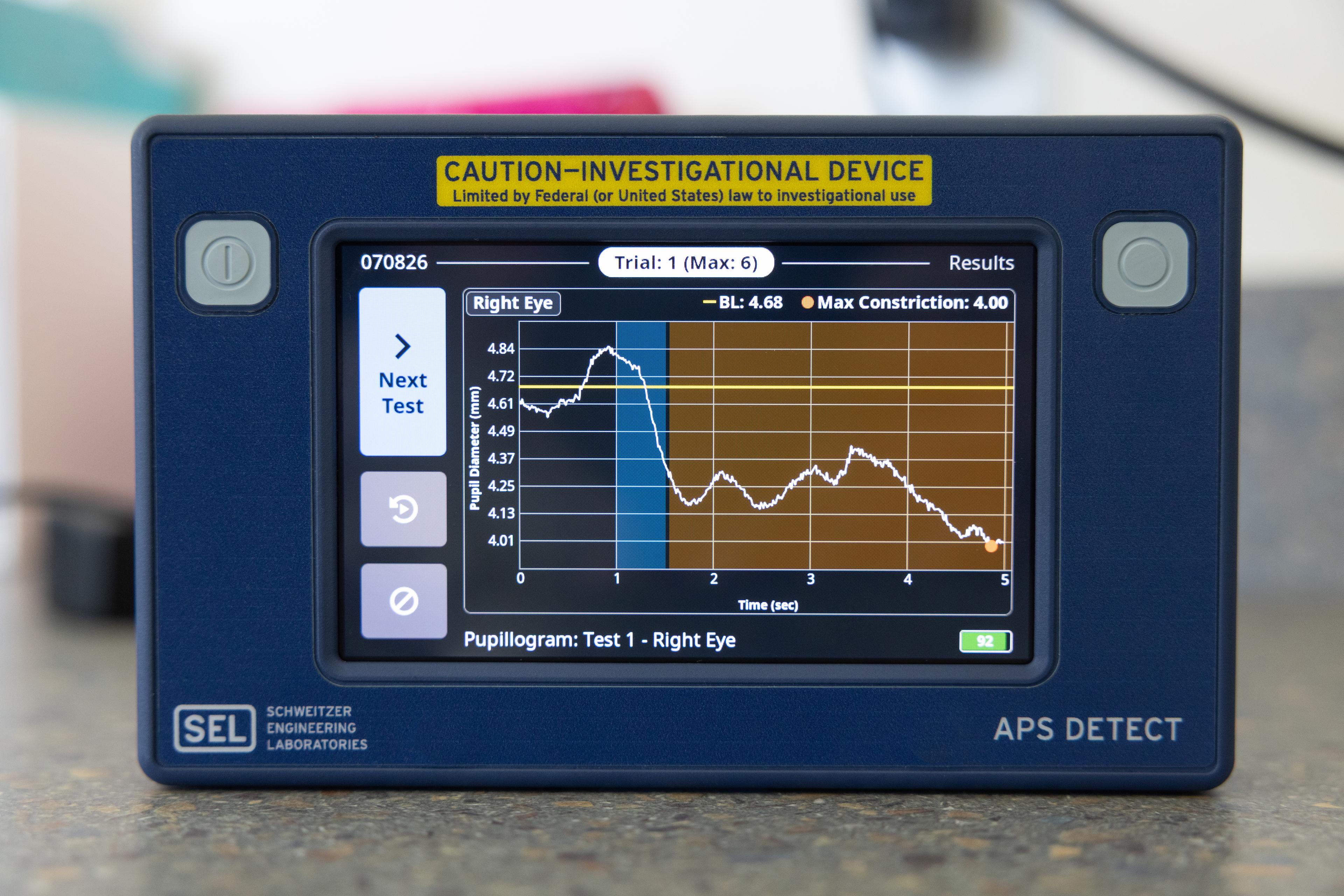
The APS Detect is an investigational hand-held device being examined as a potential screening tool used to measure the PLR quickly, and accurately, with ease. It is being examined for safety and effectiveness as a diagnostic aid to bolster decision making about ASD screening within routine well-child exams for young children. A graphic user interface on a touchscreen guides the clinician through the steps required to capture valid and reliable PLRs.
How does it work?
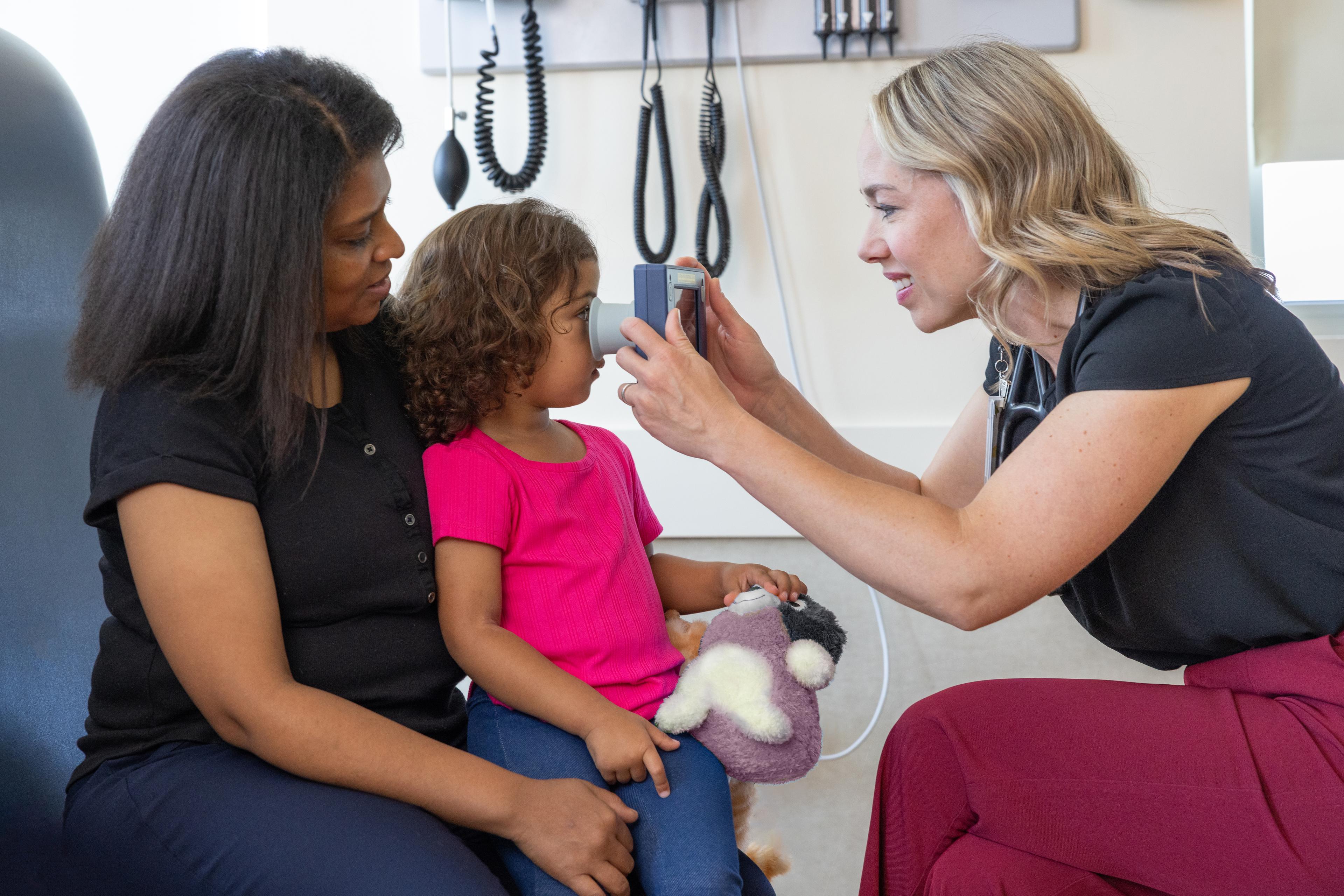
The device collects two PLR test recordings for each eye. It conducts a five second recording of pupillary change in response to a light stimulus. Light shines briefly in the child’s eye to elicit the PLR, while an image sensor captures the change. The device captures 400 samples per eye, at a rate of 80 frames per second. An eye tracking algorithm converts the image capture into pupillary diameter and velocity measurements then compares those measurements to typical PLRs based on the child’s age and alignment with PLR thresholds predicting ASD risk. An Autism Pupil Screen (APS) score is generated for further consideration among other developmental indicators reviewed by the physician, providing an objective indicator for deciding to fully evaluate for ASD.