Clinical Research
A New Way of Thinking About Brain Function and the Fundamentals of Autism Screening

Screening for Autism in Children
The American Academy of Pediatrics recommends screening children for autism spectrum disorder (ASD) at 18 and 24 months of age. Currently, the most widely used behavioral screening tool is the Modified Checklist for Toddlers- R/F, which relies on a two-stage parent report process, producing results based on subjective reporting and observation. To date, there is limited availability of an objective screening mechanism for ASD. The average age of diagnosis in the U.S. is forty-seven months. This is considered late for children to benefit from early interventions shown to make a significant difference in long-term outcomes and quality of life.
The Neuroscience Behind the Technology
Eye-tracking technology has emerged as a promising adjunctive measure to current screening practices. Whereas eye-tracking alone can be influenced by social motivation, environment, and visual attention, innovative research at SEL Bioengineering explores an involuntary response, the pupillary light reflex (PLR). The PLR is a sensitive objective physical marker of the likelihood of ASD. This work focuses on aspects of the visual pathway influenced by neural activity originating deep within the brainstem at the locus coeruleus (LC). This structure releases norepinephrine (NE), and as a system, modulates arousal and stress response. The LC-NE system regulates cranial nerves impacting essential functions such as hearing, breathing, oral motor movement, and vision. This research focuses on noninvasive measurement of the efficiency of the cranial nerves which activate the pupil response in order to indirectly assess this system.
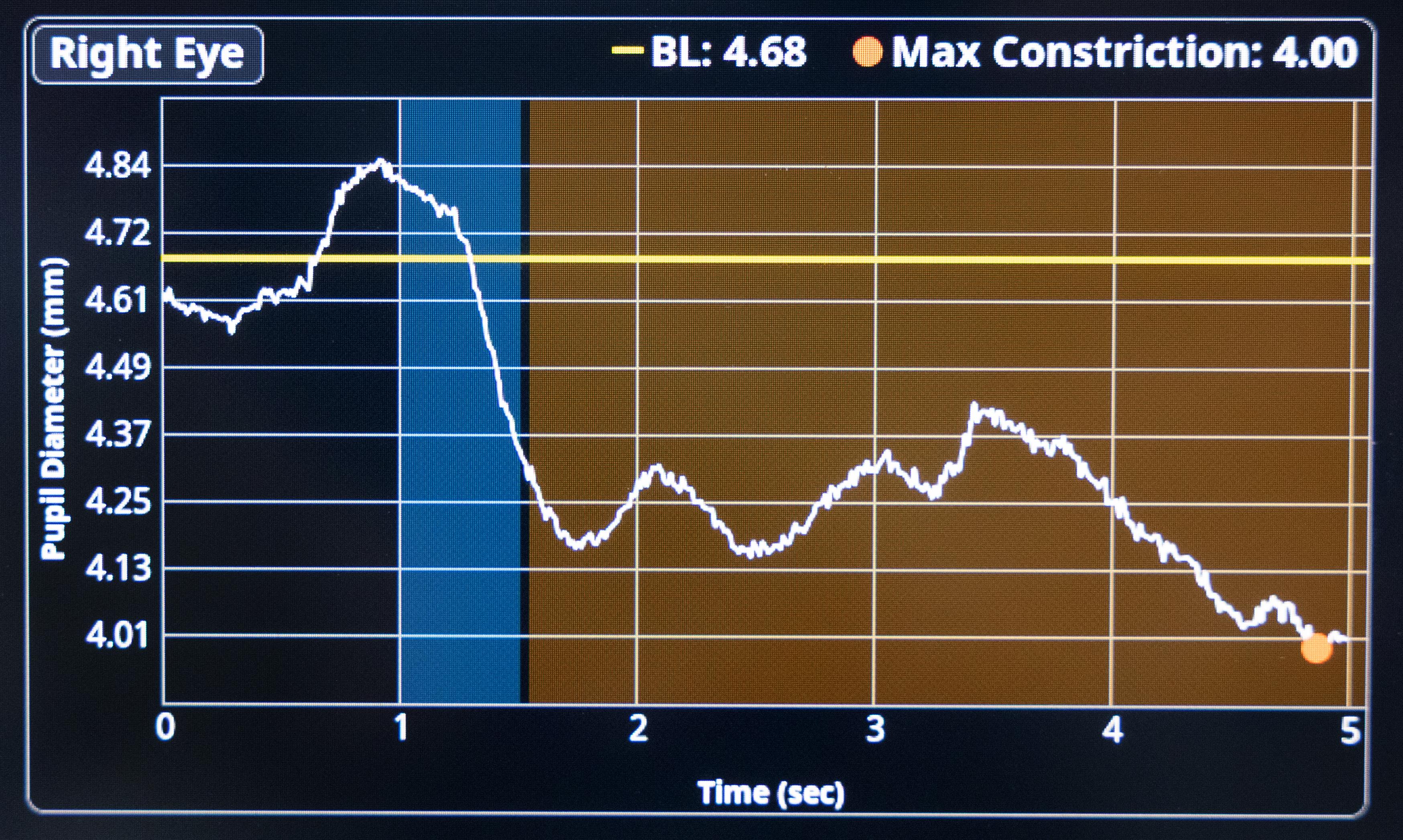
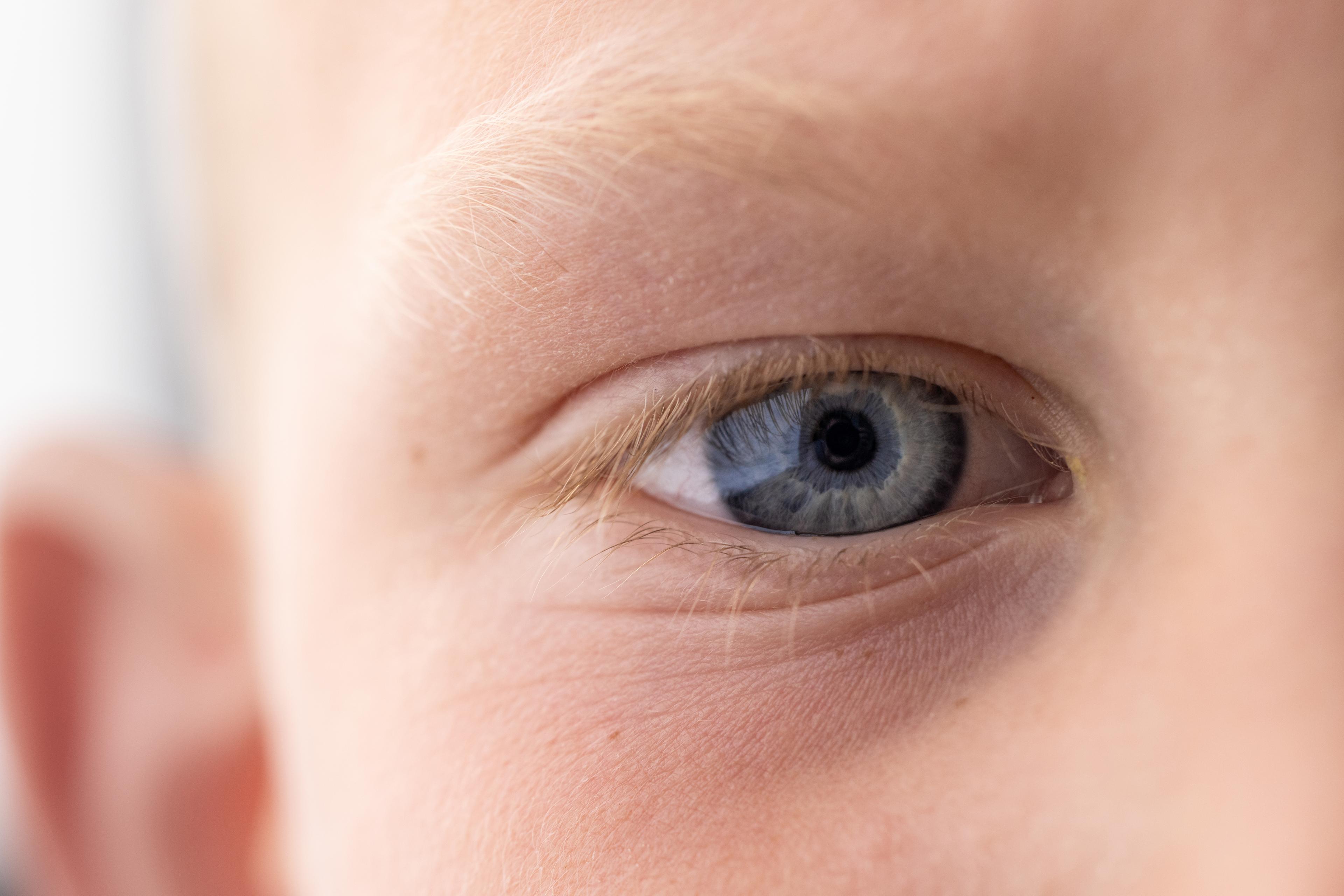
Typical and Atypical Pupillary Light Reflex
The PLR is activated by the autonomic nervous system. This two-part system is responsible for sensory and physical regulation and is commonly known as your “fight or flight” response. Balance in this system is necessary for adaptation in one’s environment, and for regulating physical and behavioral responses. In the presence of light, the pupil constricts, indicating an active parasympathetic nervous system. Under dark conditions, the pupil dilates to let more light into the eye. This dilation indicates adaptation to the environment and indicates activation of the sympathetic nervous system. Norepinephrine is released, observed as an increase in pupil size.
Multiple studies have shown that children with ASD demonstrate a hypervigilant autonomic nervous system, which can be observed in an atypical PLR. In young children with ASD, the pupil will initially constrict faster and then dilate more slowly compared to the rate of a typical PLR. This pupil response can be an early sign of atypical neurodevelopment and correlates with outcomes from standardized tools assessing the behavioral and sensory characteristics of ASD.
References
- Nyström, P., Gliga, T., Jobs, E. N., Gredebäck, G., Charman, T., Johnson, M. H., Bölte, S., & Falck-Ytter, T. (2018). Enhanced pupillary light reflex in infancy is associated with autism diagnosis in toddlerhood. Nature Comm 9(1):1-5. https://doi.org/10.1038/s41467-018-03985-4
- Fan, X., Miles, J. H., Takahashi, N., & Yao, G. (2009). Abnormal transient pupillary light reflex in individuals with autism spectrum disorders. J Autism Dev Disorders 39(11):1499-1508. https://link.springer.com/article/10.1007%252Fs10803-009-0767-7
- Dinalankara, D. M., Miles, J. H., Nicole Takahashi, T., & Yao, G. (2017). Atypical pupillary light reflex in 2–6‐year‐old children with autism spectrum disorders. Autism Research, 10(5):829-838. https://onlinelibrary.wiley.com/doi/full/10.1002/aur.1745
- Kercher, C., Azinfar, L., Dinalankara, D. M., Takahashi, T. N., Miles, J. H., & Yao, G. (2020). A longitudinal study of pupillary light reflex in 6-to 24-month children. Scientific Reports 10(1):1-9. https://doi.org/10.1038/s41598-020-58254-6
- Lynch, G. T., James, S. M., Cardon, T. A., & McPherson, S. M. (2022). Sensitivity and specificity of pupillary light reflex measures for ASD using monocular pupillometry. Neurological Sciences, 43(7), 4537-4545. https://link.springer.com/article/10.1007/s10072-022-05976-2
- Nyström, P., Gredebäck, G., Bölte, S., & Falck-Ytter, T. (2015). Hypersensitive pupillary light reflex in infants at risk for autism. Molecular Autism 6(1):10. https://pubmed.ncbi.nlm.nih.gov/25750705/
- Daluwatte, C., Miles, J. H., Sun, J., & Yao, G. (2015). Association between pupillary light reflex and sensory behaviors in children with autism spectrum disorders. Research in Developmental Disabilities, 37, 209-215.